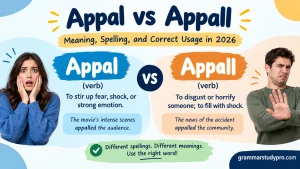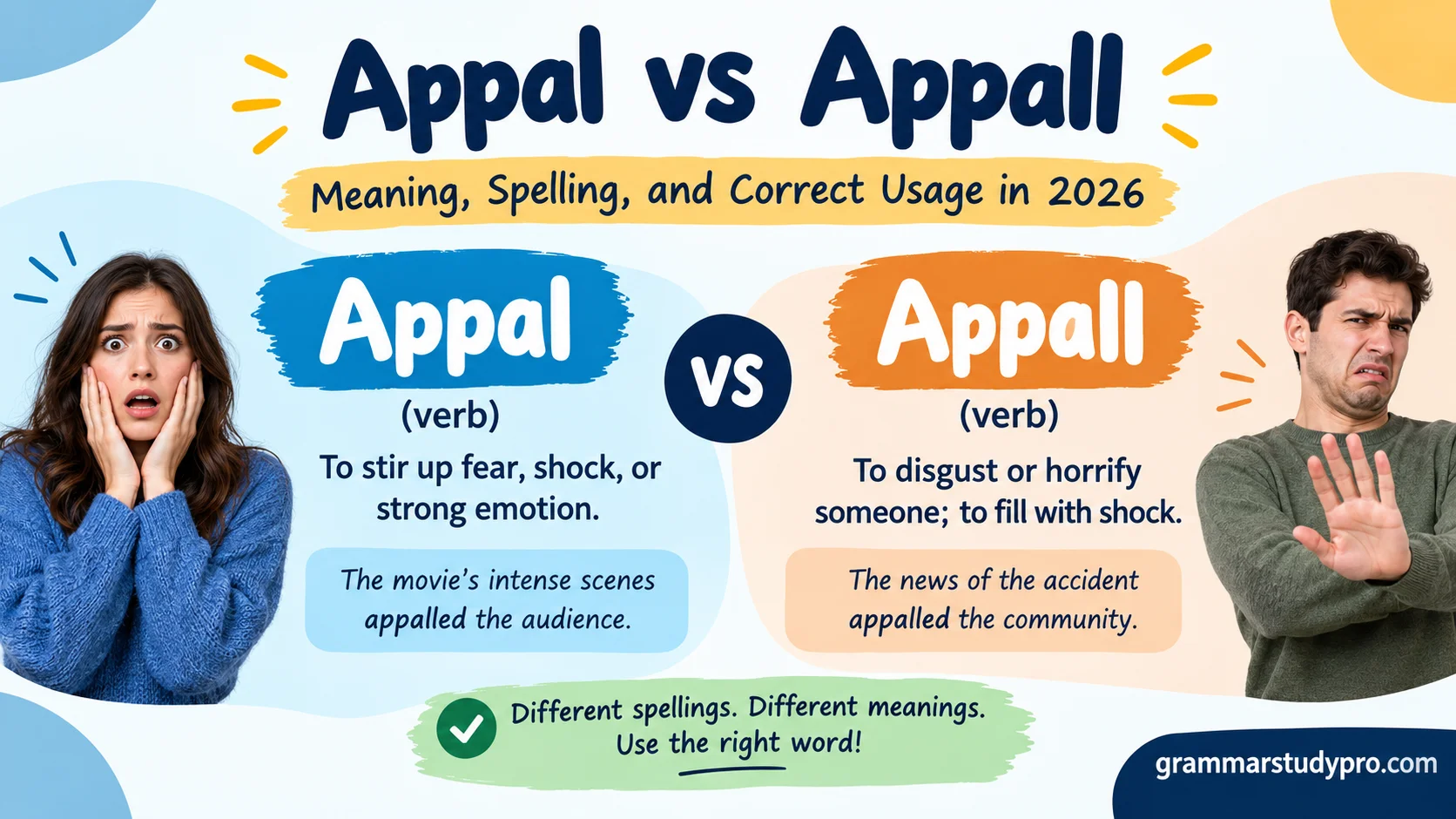
When you see Appal vs Appall in a novel or email, remember that both words mean to shock, horrify, or deeply disturb someone.
Both appal and appall are verbs with identical meanings and pronunciation. They describe a strong emotional reaction, such as feeling shocked by a dishonest official’s appalling behavior. The subtle difference lies in spelling, not meaning. Appal is the standard British English spelling, while appall is the standard American English spelling. These spelling variants often puzzle native English speakers because they look similar and sound identical. Understanding this distinction clears confusion and helps you choose the correct spelling for your audience.
The English language has fascinating quirks, and this spelling difference reflects regional preferences and language standards. British readers generally expect British spelling, whereas American readers usually expect American spelling. Both forms are correct, but your selection should match your audience, writing style, and stylistic preferences. These regional spelling conventions affect professional writing, emails, and other written communication. Checking spelling accuracy also helps you follow grammar rules, improve word choice, and avoid unnecessary errors. Although the words share identical meanings, their spelling reflects language variation rather than a difference in what they express.
To understand when to use each form, consider their origins, definitions, regional usage, and practical examples. The word origins explain why the spellings differ across regions, while everyday word usage shows how they fit naturally into sentences. For example, “The shocking decision appalled the public” describes a reaction of deep dismay. Learning these language rules strengthens your English grammar, vocabulary, writing skills, and reading comprehension. With these expert tips, you can recognize the difference, avoid spelling mistakes, and keep your writing consistent.
Quick Answer:
Use appall in American English and appal in British English. Both verbs mean to shock, horrify, or deeply dismay someone. They don’t have different meanings or levels of intensity.
For example:
- American English: The discovery of widespread fraud appalled the investigators.
- British English: The discovery of widespread fraud appalled the investigators.
Notice that the sentences are identical. The regional spelling difference appears in the base verb, not in its past-tense form.
Here’s the essential rule to remember:
- Appall: Preferred American English spelling.
- Appal: Preferred British English spelling.
- Appalled: Correct past-tense and past-participle spelling in both varieties.
- Appalling: Correct -ing form in both varieties.
- Appaled and appaling: Incorrect spellings in standard modern English.
If you’re writing for a US audience, choose appall. When following British English conventions, use appal.
Comparison Overview
The following table summarizes the key differences between appal and appall, including their meanings, regional preferences, and related forms.
| Feature | Appal | Appall |
| Part of speech | Verb | Verb |
| Meaning | To shock, horrify, or deeply dismay | To shock, horrify, or deeply dismay |
| Preferred regional spelling | British English | American English |
| Base form | appal | appall |
| Third-person singular | appals | appalls |
| Simple past | appalled | appalled |
| Past participle | appalled | appalled |
| Present participle | appalling | appalling |
| Example | The decision may appal readers. | The decision may appall readers. |
Both spellings are established English variants. Neither changes the meaning of the sentence, so your choice should reflect your audience and preferred style guide.
For dictionary confirmation, consult the and the
What Does Appal Mean?
Definition of Appal
Appal is a verb that means to cause someone to feel intense shock, horror, or disapproval. People often use it when something seems cruel, disturbing, morally wrong, or extremely unpleasant.
The word expresses a stronger reaction than ordinary surprise. For example, you might be surprised by an unexpected bill, but you might feel appalled by evidence that someone deliberately stole money from vulnerable people.
According to the appal is the British English spelling, while North American English uses appall. The dictionary also identifies horrify as a close synonym.
Examples of Appal in Sentences
These examples show how to use appal naturally in British English.
- The evidence of animal cruelty would appal any compassionate person.
- The poor living conditions appalled the inspectors.
- His careless attitude toward workplace safety may appal his colleagues.
- The amount of food wasted at the event appals local volunteers.
- It appalled the community that officials had ignored repeated complaints.
Each sentence describes a reaction to something troubling or unacceptable.
Notice how the verb works in different tenses. You can write appal when discussing a possible reaction, appals for a present-tense reaction, and appalled for a reaction that occurred in the past.
When Should You Use Appal?
Choose appal when you’re writing in British English or following a publication’s British spelling conventions.
For instance, a British newspaper might write, “The findings appal residents across the region.” An American publication would generally write, “The findings appall residents across the region.”
Both sentences communicate the same idea. The spelling simply follows a different regional convention.
What Does Appall Mean?
Definition of Appall
Appall is the preferred American English spelling of the verb meaning to shock, horrify, or deeply dismay someone. It often describes a reaction to something offensive, cruel, unjust, or seriously disappointing.
The word can describe an emotional response to real events, reported information, or even an idea.
For example, a person might feel appalled by workplace discrimination, disturbing medical conditions, or a decision that puts others at risk. In each case, the reaction goes beyond mild annoyance.
The defines appall in terms of causing strong feelings of shock or disapproval.
Examples of Appall in Sentences
Here are several examples suited to American English writing.
- The evidence of widespread fraud could appall even experienced investigators.
- I was appalled by the way the manager treated the new employees.
- The amount of plastic waste in the river appalls environmental volunteers.
- Her decision to ignore the safety warnings appalled the entire team.
- It appalls me that some customers are deliberately misled.
These examples illustrate several common sentence patterns.
You can use appall with a direct object, as in “The decision appalled the team.” You can also describe a person’s reaction with appalled by or appalled at, as in “The team was appalled by the decision.”
Both patterns are natural and widely used.
How Strong Is the Word Appall?
Appall generally suggests a serious negative reaction. However, the situation determines its intensity.
Consider these examples:
- “The movie disappointed me.” This describes dissatisfaction.
- “The movie shocked me.” This suggests a stronger or unexpected reaction.
- “The movie appalled me.” This suggests deep shock, horror, or disapproval.
The distinctions aren’t absolute. Still, appall usually carries a sense of moral concern, disgust, or intense dismay that surprise doesn’t necessarily express.
Main Differences Between Appal vs Appall
Although the words look different, their meaning and grammatical role remain the same. The main differences involve regional spelling and how writers maintain consistency.
The Difference Between Appal and Appall Is Regional
American and British English sometimes spell the same word differently. Examples include color/colour, organize/organise in relevant style conventions, and traveling/travelling.
The appal/appall distinction follows this broader pattern, but it has a specific spelling difference: American English generally retains the double l in the base verb.
| American English | British English |
| appall | appal |
| appalls | appals |
| appalled | appalled |
| appalling | appalling |
Oxford explicitly identifies appal as British English and appall as North American English. Its listed verb forms confirm that both varieties use appalled and appalling.
Practical rule: If your article follows American English, use appall and appalls. If it follows British English, use appal and appals.
Appal and Appall Have the Same Meaning
Neither spelling describes a different emotion or a different degree of horror.
For example:
- American English: The report may appall its readers.
- British English: The report may appal its readers.
Both sentences mean that the report may cause readers to feel shocked or deeply disturbed.
You shouldn’t choose one spelling because you believe it sounds stronger, more formal, or more emotional. The distinction is regional, not semantic.
The Difference Doesn’t Extend to Every Verb Form
One of the most useful details is that the regional distinction disappears in the past-tense and present-participle forms.
Consider these sentences:
- The photographs appalled the visitors.
- The photographs were appalling.
- The visitors felt appalled by the photographs.
All three use the same spelling in American and British English.
This makes the base verb the main spelling decision. Once you change it to appalled or appalling, you can use the standard form in either variety.
Appal vs Appall: Correct Verb Forms and Spelling Rules
Understanding the verb forms helps you avoid mistakes in essays, professional emails, articles, and everyday writing.
The table below shows the standard forms and how they work in sentences.
| Grammatical form | American English | British English | Example |
| Base verb | appall | appal | The decision may appall readers. |
| Third-person singular | appalls | appals | The decision appalls readers. |
| Simple past | appalled | appalled | The decision appalled readers. |
| Past participle | appalled | appalled | Readers were appalled by the decision. |
| Present participle | appalling | appalling | The decision was appalling. |
Why Is Appalled Spelled With Two Ls?
The correct spelling is appalled, not appaled.
When you form the past tense of appall, the final l remains doubled before the -ed ending. The British base form appal also takes the spelling appalled.
For example:
- Correct: The customers were appalled by the misleading advertisements.
- Incorrect: The customers were appaled by the misleading advertisements.
The same rule applies when you use the past participle with a helping verb.
- The investigation has appalled many observers.
- The public was appalled by the discovery.
The word can function as part of a verb phrase or as an adjective describing someone’s reaction. Its spelling remains the same.
Is Appaled Ever Correct?
In standard modern English, appaled is a misspelling of appalled.
The error usually happens because writers remember the single l in the British base form appal and carry that spelling into the past tense. However, the standard past-tense form uses two ls.
Remember these forms:
- Appal → appalled
- Appall → appalled
- Appal → appalling
- Appall → appalling
If you’re writing for an American audience, you can make the rule easier by learning the full American sequence: appall, appalls, appalled, appalling.
Is It Appaling or Appalling?
Appalling is the correct spelling in both American and British English. Appaling is incorrect in standard usage.
The word can function as an adjective meaning extremely bad, shocking, or disturbing.
Examples include:
- The report revealed appalling working conditions.
- The restaurant received complaints about its appalling service.
- Investigators described the prisoners’ living conditions as appalling.
Notice that appalling can describe more than a horrifying event. It can also describe something of extremely poor quality, such as terrible service or an unacceptable standard of cleanliness. The covers both uses.
When Should You Use Appal or Appall?
The easiest way to choose the right spelling is to identify your audience before you start writing. Once you’ve selected American or British English, apply that convention consistently.
Use Appall in American English
If you’re writing for readers in the United States, appall is the standard choice. Use it in school assignments, news articles, professional documents, blog posts, and everyday communication.
Examples:
- The investigation may appall anyone who values honesty.
- The company’s decision appalls its longtime customers.
- We were appalled by the treatment of the workers.
- The report exposed appalling safety violations.
The last two examples use forms that are standard in both American and British English.
Use Appal in British English
Choose appal when your writing follows British English conventions. This spelling is standard in British dictionaries and publications.
Examples:
- The discovery could appal the public.
- The waste of public money appals local residents.
- The public was appalled by the findings.
- The investigation uncovered appalling conditions.
Notice that appalled and appalling retain their usual spelling. You don’t need to change them when switching from American to British English.
What If You’re Writing for an International Audience?
International readers generally understand both spellings, but consistency still matters.
If your website primarily targets American readers, use appall. If a British publisher requests British English, use appal. When a company or publication provides a style guide, follow its instructions.
For example, a US-based grammar website should normally use appall in its explanations and examples. A UK publication may use appal instead.
The goal isn’t to prove that one spelling is better. It’s to make your writing consistent and appropriate for your audience.
Appalled vs Appalling: What’s the Difference?
Although appalled and appalling share the same root, they serve different purposes in a sentence. Understanding this distinction helps you describe both an emotional reaction and its cause.
What Does Appalled Mean?
Appalled describes someone who feels shocked, horrified, or deeply dismayed by something.
Examples:
- She was appalled by the manager’s behavior.
- The visitors looked appalled when they saw the damage.
- I felt appalled at the amount of food being wasted.
- They stood silently, appalled by what they had witnessed.
In each example, appalled describes the person experiencing the reaction.
What Does Appalling Mean?
Appalling usually describes something that causes shock, horror, or strong disapproval. It can also mean extremely bad or unpleasant.
Examples:
- The manager’s behavior was appalling.
- The building had appalling safety conditions.
- The company provided appalling customer service.
- The report described an appalling lack of basic supplies.
Here, appalling describes the behavior, conditions, service, or situation that causes the reaction.
Appalled vs Appalling at a Glance
| Word | What it describes | Example |
| Appalled | A person’s reaction | We were appalled by the decision. |
| Appalling | Something shocking or extremely bad | The decision was appalling. |
Here’s an easy way to remember the difference:
- Appalled: How someone feels.
- Appalling: What causes that feeling.
For instance, a person may feel appalled by an appalling mistake. Both words fit because they describe different parts of the same situation.
Appal vs Appall: Common Mistakes to Avoid
Even experienced writers sometimes confuse these spellings. Fortunately, a few simple checks can prevent most errors.
Using the Wrong Regional Spelling
Writing appal in an American English article isn’t necessarily a spelling error in every context because appal is a recognized British variant. However, it may conflict with the article’s intended spelling convention.
Correction:
- American English: The news appalled the community.
- British English: The news appalled the community.
In this example, the past-tense spelling stays the same. To see the regional difference, compare The news may appall the community with The news may appal the community.
Writing Appaled Instead of Appalled
This mistake drops one l from the standard past-tense form.
- Incorrect: The staff were appaled by the decision.
- Correct: The staff were appalled by the decision.
Remember that both appal and appall form their past tense as appalled.
Writing Appaling Instead of Appalling
The correct form contains two ls.
- Incorrect: The company received complaints about its appaling service.
- Correct: The company received complaints about its appalling service.
If you can remember the correct past-tense spelling, appalled, the related form appalling becomes easier to recognize.
Confusing Appalled and Appalling
These words aren’t interchangeable in every sentence.
- Incorrect: I was appalling by the news.
- Correct: I was appalled by the news.
- Correct: The news was appalling.
The first correct sentence describes a person’s reaction. The second describes the news itself.
Quick Spelling Check
| Incorrect form | Correct form |
| appaled | appalled |
| appaling | appalling |
| He appal the audience. | He appalls the audience. |
| The news may appal them. (US style) | The news may appall them. |
| The news may appall them. (UK style) | The news may appal them. |
The final two rows illustrate regional preferences rather than universal spelling errors. Choose the form that matches your intended variety of English.
Appal vs Appall: Origin and History
The history of appal and appall helps explain why the word has these spellings and why its meaning involves such a strong reaction.
According to the the word traces back through Middle English to the Old French apalir, meaning “grow pale.” The French word combined a- with palir, meaning to grow pale.
The original idea was connected to becoming pale, often because of fear or shock. Over time, the meaning developed into causing someone to feel horror or deep dismay.
That historical connection still makes sense today. Someone who hears terrible news may turn pale, freeze in disbelief, or struggle to respond. Modern appall captures the intense emotional reaction, although a person doesn’t need to show any physical signs of shock.
The spelling difference reflects regional conventions. American English generally uses the double-l form appall, while British English commonly uses appal.
Synonyms for Appal and Appall
Choosing the right synonym can make your writing more precise. Although several words overlap with appal and appall, each carries a slightly different shade of meaning.
| Synonym | Meaning | Example |
| Horrify | Cause intense fear or shock | The testimony horrified the audience. |
| Shock | Cause surprise or distress | The announcement shocked employees. |
| Dismay | Cause worry, disappointment, or loss of confidence | The decision dismayed the residents. |
| Disgust | Cause strong revulsion or moral objection | The cruelty disgusted the witnesses. |
| Stun | Overwhelm someone with surprise | The unexpected discovery stunned the team. |
| Outrage | Cause intense anger over something offensive or unjust | The unfair treatment outraged the public. |
How Do You Choose the Right Synonym?
Consider the type of reaction you want to describe.
Use horrify when something creates intense fear or horror. Choose dismay when disappointment or discouragement matters more. Use disgust when something provokes revulsion, and choose outrage when anger over injustice takes center stage.
Appall works particularly well when something causes strong shock or disapproval.
For example, a delayed delivery might disappoint a customer. Deliberately concealing a dangerous product defect could appall that customer because the situation involves a much more serious concern.
FAQs
1. What is the difference between appal and appall?
Appal is the standard British English spelling, while appall is the standard American English spelling. Both words mean to shock, horrify, or deeply disturb someone.
2. Is appal correct in American English?
Although readers may understand it, appal is not the standard American spelling. American English typically uses appall in formal writing, emails, and other written communication.
3. What does appall mean in a sentence?
Appall means to shock or horrify someone greatly. For example, “The cruel treatment of the animals appalled the visitors.”
4. Are appal and appall pronounced the same way?
Yes. Both words generally have the same pronunciation and meaning. The difference lies in their spelling conventions, which vary between British and American English.
5. Is appalling spelled with one L or two Ls?
Appalling is spelled with two Ls in both British and American English. It describes something that causes shock, horror, or deep dismay. For example, “The conditions in the building were appalling.”
Conclusion
Understanding Appal vs Appall is simple once you remember the regional spelling difference. Use appal in British English and appall in American English. Both words express the same idea: to shock, horrify, or deeply disturb someone.
Choosing the appropriate spelling for your audience helps maintain consistency, improve spelling accuracy, and make your writing clearer and more professional.